Tag: UX Design

  • The Next Frontier in Product Design

    The Next Frontier in Product Design

    As technology advances at an unprecedented pace, interface and experience design are undergoing a transformative shift. The future of design is poised to be defined by groundbreaking innovations that not only enhance how we interact with digital content but also how we perceive and navigate our surroundings. This article, inspired by the AI and Innovation presentations from the 2024 Config (Figma Conference), explores three pivotal trends shaping this future: spatial computing, designing for canvases, and rendering 3D content. By learning more about these areas, we can glimpse the exciting possibilities that lie ahead and understand how they will revolutionize our digital interactions.

    Spatial Computing

    Spatial computing represents a paradigm shift in how we interact with technology. Moving beyond traditional screens, spatial computing immerses users in a 3D environment where digital content seamlessly integrates with the physical world. Imagine Tony Stark, aka Iron Man, who can view and process multiple forms of data in real time, giving him superhuman intelligence.

    The Apple Vision Pro exemplifies this innovation, offering a glimpse into the potential of augmented reality (AR), virtual reality (VR), and mixed reality (MR) to reshape everyday experiences. By leveraging advanced sensors and spatial mapping, the Vision Pro allows users to interact with digital elements as if they were tangible objects in their environment. This immersive experience opens up new possibilities for entertainment, education, and productivity, setting the stage for a future where the boundaries between the digital and physical worlds blur.

    Designing for Canvases Instead of Portals

    As we transition into an era dominated by advanced computing, the approach to designing user interfaces must evolve. Traditional interfaces, confined to rectangular screens or “portals,” with a lot of vertical scrolling, will give way to dynamic and flexible “canvases” that adapt to various contexts and environments. This shift demands a reimagining of design principles, focusing on creating intuitive and immersive experiences that leverage the full potential of spatial computing.

    For example, imagine an architect using AR to project a 3D model of a building onto a construction site, allowing stakeholders to explore and interact with the design in real time.

    Additionally, consider the new infotainment systems in vehicles. Instead of a traditional dashboard, these systems provide a customizable canvas that adapts to the driver’s needs, displaying navigation, media, vehicle performance, and even real-time updates from the road environment. This flexible interface not only enhances the driving experience but also improves safety and convenience by providing contextually relevant information seamlessly integrated into the driving environment.

    Virtual reality (VR) further expands the possibilities for designing beyond traditional portals. The Meta Quest, for example, offers an immersive environment where users can interact with digital content in a fully 3D space. In a VR setting, designers can create entire virtual worlds that users can explore and engage with, providing experiences that are both deeply interactive and visually stunning. Whether it’s for gaming, virtual meetings, or training simulations, VR can transform user experiences by offering a limitless canvas that goes beyond the physical constraints of conventional screens. This opens up new avenues for creativity and functionality, making the user experience more immersive and engaging than ever before.

    Rendering 3D Content in the Browser

    The ability to render 3D content directly in web browsers has been a game-changer for UX designers and developers. WebGL, a powerful graphics library, enables the creation of rich, interactive 3D experiences that run seamlessly across different devices and platforms. This technology has opened the door to a new realm of possibilities, from immersive gaming experiences to intricate data visualizations.

    A prime example is NASA’s Eyes applications, which use WebGL to offer an interactive exploration of our solar system. Users can navigate through space, zoom in on planets and moons, and witness real-time data visualizations of spacecraft trajectories. By bringing high-quality 3D graphics to the web, WebGL empowers designers to create more engaging and interactive experiences that captivate users and drive deeper engagement.

    Parting Words

    The future of user experience is a thrilling frontier where spatial computing, canvas-based design, and WebGL-powered 3D content converge to redefine how we interact with technology. These innovations promise to create more immersive, intuitive, and engaging experiences, seamlessly blending the digital and physical worlds.

    As we continue to explore and harness the potential of these technologies, the possibilities for enhancing our daily lives are boundless. By embracing these trends, designers and developers can pave the way for a future where user experience transcends traditional boundaries, delivering unprecedented levels of interactivity and immersion. The journey has just begun, and the future of UX holds exciting prospects that will reshape our digital experiences in ways we can only begin to imagine.
  • Elevating Excellence: A Guide for Graphic Designers Transitioning to UX/UI

    Elevating Excellence: A Guide for Graphic Designers Transitioning to UX/UI

    The journey from graphic design to UX/UI design is a rewarding but challenging transformation. While both fields prioritize creating visually appealing work, the approach, methodology, and end goals differ significantly. Graphic design emphasizes aesthetics, while UX/UI design centers around user experience, functionality, and interactivity. For graphic designers looking to transition into product design, understanding these differences and mastering new skills is essential.

    Understanding the Core Differences

    Designing for Different Canvases

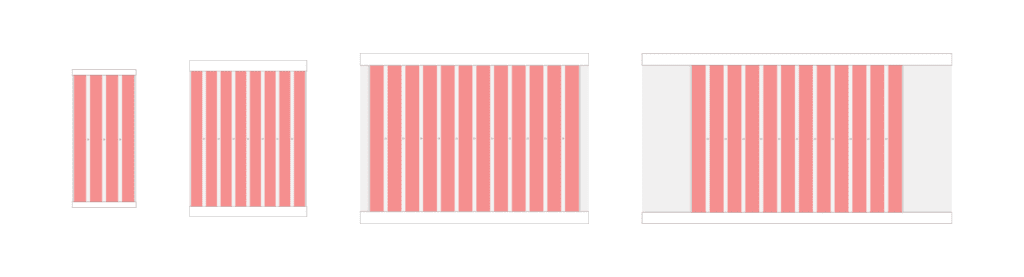
    Graphic designers often work with static, fixed-size canvases. In contrast, product designers must consider multiple devices and screen sizes. Responsive design is crucial in UX/UI, requiring designers to create flexible layouts that work across desktops, tablets, and mobile devices. Understanding how to design for various screen sizes and ensuring a consistent user experience is a fundamental skill for product designers.

    Web and mobile canvases

    Caption: This illustration shows four different canvases — mobile, tablet, desktop, and wide screens — and their basic layout properties.

    Focus on Functionality and User Experience

    Graphic design is primarily about creating visually engaging content, such as logos, posters, and marketing materials. The emphasis is on aesthetics, typography, and visual harmony. In contrast, UX/UI design focuses on how a product feels and functions. It involves understanding user needs, creating intuitive interfaces, and ensuring a seamless user experience. The mantra of UX/UI design is “form follows function,” meaning that the design’s primary goal is to serve the user’s needs effectively before considering visual appeal.

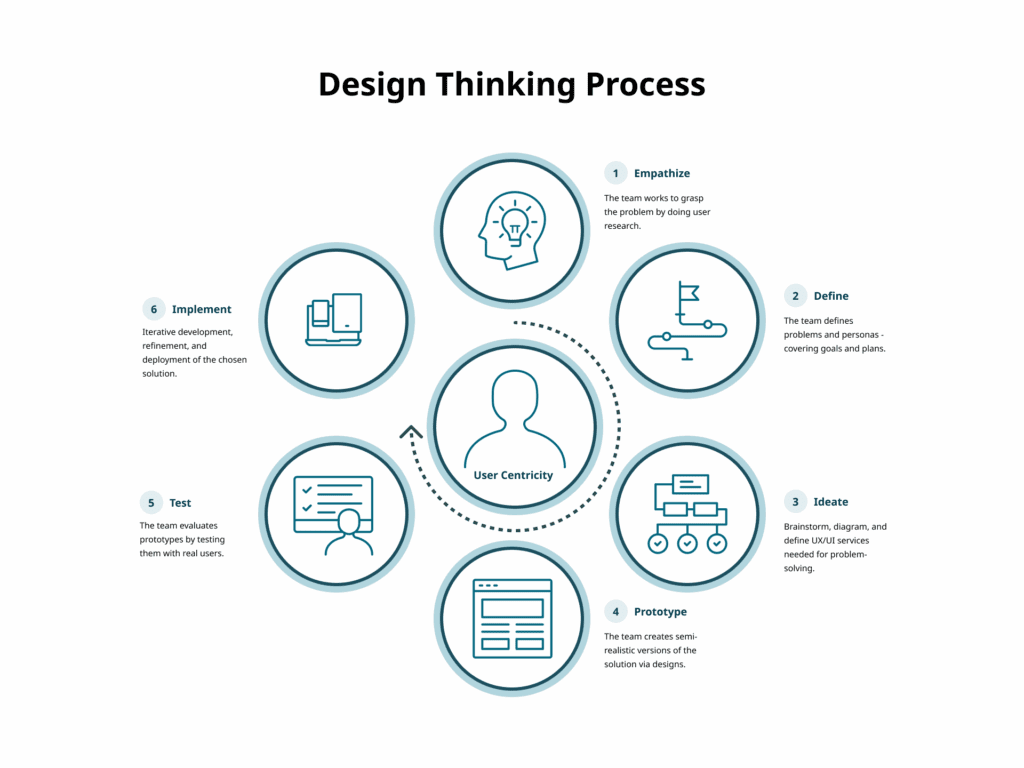
    The Design Thinking Process

    The UX/UI design process is more structured and iterative than traditional graphic design. It typically involves:

    1. Empathize

    Understand the needs, experiences, and challenges of users through research.

    Techniques include:

    • User interviews
    • Observation
    • Surveys and questionnaires

    2. Define

    Clearly articulate the problem you are aiming to solve.

    Methods include:

    • User personas
    • Problem statements
    • User journey maps

    3. Ideate

    Generate a wide range of ideas and potential solutions.

    Techniques include:

    • Brainstorming sessions
    • Mind mapping
    • Sketching

    4. Prototype

    Create simple and cost-effective versions of proposed solutions.

    Methods include:

    • Paper prototypes
    • Digital prototypes using tools like Sketch or Figma
    • Storyboards

    5. Test

    Evaluate prototypes with real users to gather feedback.

    Methods include:

    • Usability testing
    • A/B testing
    • Feedback sessions

    6. Implement

    Translate the final design into a functional product.

    This involves:

    • Design handoff with specifications and assets
    • Collaboration with developers
    • Quality assurance testing
    • Launch
    • Post-launch monitoring

    Iteration

    Design thinking is an iterative process. Based on feedback, designers may revisit previous steps to continually refine and improve solutions.

    Learning the Technical Basics

    One major difference between graphic and product design is the need for technical knowledge, particularly web technologies. Understanding HTML, CSS, and JavaScript is vital. While graphic designers often focus on pixel-perfect visuals, product designers must also consider technical constraints and browser behavior.

    HTML (Hypertext Markup Language)

    HTML defines structure and content.

    Key basics:

    • Common tags such as div, span, p, a, img, h1–h6, ul, ol
    • Semantic HTML using header, footer, article, section
    • Attributes like class, id, href, src
    • Forms using form, input, label, button

    CSS (Cascading Style Sheets)

    CSS controls styling and layout.

    Key basics:

    • Selectors and properties
    • The box model: content, padding, border, margin
    • Flexbox and Grid for layout
    • Responsive design with media queries

    Caption: The CSS Box Model Module Level 3, provided by the W3C.

    JavaScript

    JavaScript adds interactivity.

    Key basics:

    • Syntax fundamentals and variables
    • DOM manipulation using getElementById, querySelector, addEventListener, classList
    • Event handling
    • Libraries and frameworks such as jQuery or React

    Mastering these foundations helps designers collaborate effectively with developers and build responsive, functional interfaces.

    Building a UX/UI Skillset

    Developing a robust UX/UI skillset is crucial. Visual design remains important, but expanding into research, architecture, interaction, and technical literacy is essential.

    Key areas to develop:

    • User research
    • Information architecture
    • Wireframing and prototyping with tools like Figma
    • Interaction design principles
    • Usability and accessibility
    • Technical literacy in HTML, CSS, and JavaScript

    Practical Steps to Transition

    Transitioning can be challenging but manageable with a clear plan.

    • Education and Training: Take UX/UI courses or workshops.
    • Build a Portfolio: Redesign existing products or create new concepts that demonstrate your process.
    • Get Mentored: Seek guidance and feedback from experienced UX/UI professionals.
    • Gain Experience: Pursue internships or freelance projects to build practical skills.

    Parting Words

    Transitioning from graphic design to product design involves a shift in mindset, skillset, and process. By focusing on user experience, learning technical fundamentals, and embracing iterative design, graphic designers can successfully enter UX/UI. This evolution broadens your capabilities and enables you to create products that are both visually compelling and highly functional.

    Key Takeaways

    • Emphasis on User Experience: Functionality and interaction take priority over pure aesthetics.
    • Designing for Multiple Devices: Responsive design is essential.
    • Comprehensive Skillset: Expand beyond visuals into research, architecture, and technical literacy.
    • Structured Design Thinking: Follow an iterative process of empathy, definition, ideation, prototyping, testing, and implementation.
    • Technical Integration: Understanding HTML, CSS, JavaScript, and the box model is critical for building responsive digital products.
  • Elevating Excellence: A Guide for Scaling Product Design Teams

    Elevating Excellence: A Guide for Scaling Product Design Teams

    Elevating excellence isn’t just a goal in product design; it is essential for staying competitive and meeting user expectations. This week, we explore strategies to scale and strengthen design teams for optimal performance. Through assessing current practices, building a strong foundation, strategic hiring, and commitment to scaling, organizations can enhance their product design teams effectively. This guide outlines actionable steps and strategies to navigate this journey toward product design excellence.

    Understanding UX Maturity

    UX maturity measures an organization’s ability and commitment to delivering user-centered design. It encompasses the quality and consistency of research and design processes, resources, tools, and operations, as well as the organization’s support and commitment to UX through leadership, workforce, and culture. Assessing UX maturity helps organizations understand their current strengths and weaknesses and provides a roadmap for improvement.

    According to Forbes, studies show that companies that invest in UX see a lower cost of customer acquisition, lower support cost, increased customer retention, and increased market share.

    Forrester has found that every $1 invested in UX results in a return of $100, a 9,900% ROI.

    The UX Maturity Model

    The UX Maturity Model offers a framework to evaluate an organization’s UX capabilities across six stages:

    1. Absent: UX is ignored or nonexistent.
    2. Limited: UX work is rare, haphazard, and lacks importance.
    3. Emergent: UX efforts are functional but inconsistent and inefficient.
    4. Structured: UX processes are semi-systematic and widespread but vary in effectiveness.
    5. Integrated: Comprehensive and effective UX work is pervasive across the organization.
    6. User-Driven: Dedication to UX at all levels results in deep insights and exceptional user-centered outcomes.

    Factors in UX Maturity

    None of these factors stand alone. They reinforce and enable each other. A holistic approach is essential to advance UX maturity and realize the full value of user-centered design.

    • Strategy: UX leadership, planning, and resource prioritization.
    • Culture: Cultivating UX knowledge and career growth for practitioners.
    • Process: Systematic use of UX research and design methods.
    • Outcomes: Defining and measuring UX results.

    Assessing Current Processes and Practices

    In assessing your current design processes and practices, it is crucial to identify both strengths and areas for improvement within your workflow. This evaluation provides insight into what is functioning well and where challenges exist.

    Assessment of Current Practices

    • What aspects of our current design practice work well, and why?
    • Where do we encounter bottlenecks or inefficiencies?

    Tools and Technologies

    • Are the tools and technologies we use meeting our needs?
    • Are there new tools or technologies we should consider adopting?
    • Design Standards and Guidelines
    • Do we have a comprehensive set of design standards and guidelines?
    • How well are these guidelines communicated and adhered to?

    A thorough evaluation highlights strengths and uncovers areas that need improvement. Addressing these aspects helps streamline workflows, adopt better tools, and ensure adherence to standards, ultimately enhancing overall design quality and consistency.

    Building a Strong Foundation

    Establishing a solid foundation is crucial for scaling and strengthening a product design team. This involves ensuring that the basics are robust and well-defined.

    Key Components of a Strong Foundation

    • Clear Design Vision
    • Design Systems
    • Tools and Resources

    These components empower efficient scaling and strengthening of product design teams.

    Clear Design Vision and Strategy

    A clear design vision and strategy align the team’s efforts with company goals. This means defining a long-term vision that inspires and guides the team.

    • Vision Statement: Develop a statement that encapsulates the desired user experience, such as creating intuitive, accessible, and delightful digital experiences.
    • Strategic Goals: Set goals that support the vision, including improving satisfaction scores or increasing engagement metrics.

    With a clear vision and strategy, teams can prioritize work and make decisions that support broader business objectives.

    Design Systems

    Implementing a design system ensures consistency and efficiency across design efforts. A design system includes reusable components, guidelines, and standards that maintain a coherent visual and interaction language.

    • Component Library: A shared library of UI components such as buttons, forms, and navigation elements.
    • Style Guide: A comprehensive guide covering typography, color palettes, iconography, and visual elements.

    A well-maintained design system streamlines the design process, reduces redundancy, and keeps team members aligned.

    Tools and Resources

    Ensuring access to modern design tools and resources is critical for efficiency and innovation.

    • Design Software: Industry-standard tools like Figma for collaboration and prototyping.
    • User Research Tools: Platforms like UserTesting, Marvin, and Hotjar for usability testing and behavioral insights.
    • Collaboration Platforms: Tools such as Slack, Trello, or Asana for communication and project management.

    Equipping teams with the right tools empowers them to produce higher-quality work more effectively.

    Hiring and Team Structure

    To effectively scale a product design team, a strategic approach to hiring and structure is essential. This includes assessing skills, fostering professional development, ensuring diversity, organizing teams efficiently, and establishing strong leadership.

    In one referenced video, Joel Califa, former Product Designer at GitHub, shares lessons on structuring teams to meet business and organizational needs, determining who to hire, and setting hires up for success.

    Skills Assessment

    A thorough skills assessment identifies strengths and weaknesses within the team.

    • Inventory of Skills: Map existing capabilities such as UX research, UI design, prototyping, and accessibility.
    • Gap Analysis: Identify areas lacking expertise and address them through hiring or training.

    Professional Development

    Continuous learning keeps teams updated with trends and best practices.

    • Training Programs: Access to courses and certifications from platforms like Coursera or Nielsen Norman Group.
    • Conferences and Events: Attendance at UXPA, IxDA, or SmashingConf.
    • Internal Knowledge Sharing: Regular sessions for presenting learnings or case studies.

    Diverse Talent

    Hiring varied skill sets ensures comprehensive design coverage.

    • UX Researchers focus on behavior and needs.
    • UI Designers specialize in visual interfaces.
    • Interaction Designers shape user flows.
    • Content Designers craft user-centered messaging.
    • Design System Managers oversee system consistency.
    • Graphic Designers enhance aesthetics and brand expression.

    Team Structure

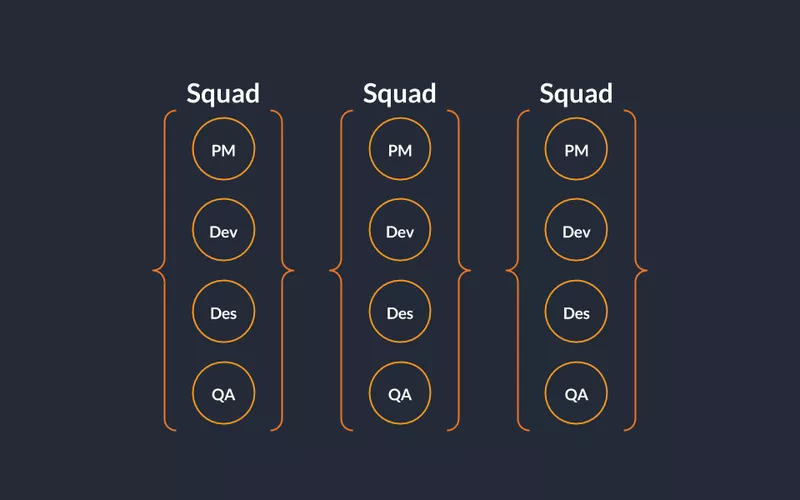
    • Cross-Functional Squads or Pods: Small teams combining designers, developers, and product managers focused on specific areas.
    • Centralized vs. Decentralized Teams: Centralization offers consistency and shared resources, while decentralization increases agility and responsiveness.
    Buffer Product Design Team is structured by squads

    Caption: Buffer, a social media management platform, organizes its teams into squads.

    Leadership

    Strong leadership advocates for design value at the highest level. Appointing roles such as Chief Creative Officer, Chief Experience Officer, or VP of Design ensures design has executive representation.

    • Advocacy: Champions design in strategic discussions.
    • Mentorship and Growth: Supports junior designers and attracts top talent.

    Scaling and Future Growth

    As organizations expand, scaling design practices becomes increasingly important. This involves addressing growth challenges, implementing scalable processes, and strengthening knowledge sharing and documentation.

    Case Study: Airbnb

    Airbnb structures its design organization to promote scalability while maintaining creativity and collaboration.

    • Cross-Functional Teams integrate designers with engineers and product managers.
    • DesignOps supports workflows, systems, and resources.
    • Design System DLS maintains consistency and collaboration.
    • Distributed Teams tap global talent pools.
    • Culture of Feedback and Learning encourages open critiques and growth.

    Scaling Practices

    • Maintaining Consistency through robust design systems.
    • Coordination Across Teams with cross-functional squads and shared documentation.
    • Scaling Research Efforts with centralized repositories and tools like Dovetail.
    • Talent Acquisition and Retention through strong employer branding and growth opportunities.

    Knowledge Sharing and Documentation

    • Effective documentation ensures continuity and improvement.
    • Process Documentation with step-by-step guides.
    • Decision Logs capturing rationale.
    • Outcome Reporting through retrospectives and metrics.
    • Regular Knowledge-Sharing Sessions and Collaborative Platforms.
    • Mentorship Programs to transfer skills and build culture.

    A Practical Plan for Scaling

    Phase 1 Foundation

    • Assess maturity
    • Establish vision and strategy
    • Appoint design leadership
    • Implement a design system

    Phase 2 Growth

    • Hire diverse talent
    • Invest in tools and learning
    • Integrate design thinking

    Phase 3 Optimization

    • Refine processes
    • Measure impact
    • Foster continuous improvement

    Championing Quality from the Top Down and Bottom Up

    Top-Down Approach

    • Executive Support through direct reporting lines.
    • Design Thinking Culture involving leadership participation.
    • Investment in Design through budgets and resources.

    Bottom-Up Approach

    • Continuous Learning through education and events.
    • Feedback Mechanisms with critiques and reviews.
    • Empowerment giving designers autonomy and ownership.

    Case Study: IBM

    Top-Down Leadership: IBM established a Chief Design Officer role reporting directly to the CEO, embedding design into strategy.

    Bottom-Up Empowerment: Company-wide design thinking workshops and internal communities encourage collaboration and growth.

    Handling Lack of Prioritization

    • Educate Stakeholders with case studies and data.
    • Deliver Quick Wins to demonstrate value.
    • Internal Advocacy from design leaders in meetings and strategy sessions.
    • Establish Metrics to Measure the Impact and Quality of Design
    • Metrics provide tangible data to guide decisions and demonstrate value.

    Trackable Metrics

    • Surveys including NPS
    • Usability Testing measuring success rates and errors
    • Design Efficiency
    • Time Tracking across phases
    • Iteration Cycles monitoring refinements
    • Business Iimpact
    • Conversion rates through A/B testing
    • User retention via cohort analysis
    • Revenue impact through sales and lifetime value metrics

    Collaboration and Communication

    Assess collaboration effectiveness between designers, developers, and stakeholders.

    • Use tools like Figma or Miro for real-time feedback.
    • Establish structured communication channels and visual aids.
    • Provide training in communication skills.

    Feedback and Reflection

    • Assess feedback mechanisms such as usability tests and stakeholder reviews.
    • Streamline feedback loops with scheduled sessions and tools.
    • Reflect on past projects to document lessons learned and integrate improvements into future work.

    Actionable Steps

    Set Goals

    • Define clear objectives such as improving consistency or increasing satisfaction.

    Establish metrics to track progress

    • Implementation Plan
    • Identify quick wins like adopting tools or improving documentation.
    • Assign responsibility and timelines with regular reviews.

    Parting Words

    Scaling and strengthening a product design team requires strategic leadership, clear processes, continuous learning, and a strong culture of design thinking. By following a structured plan and championing quality from both the top down and bottom up, organizations can build better products and foster lasting innovation.

    Key Takeaways

    • Understanding UX Maturity is essential for identifying strengths and creating improvement roadmaps.
    • Building a Strong Foundation through vision, systems, and resources enables scale.
    • Hiring and Team Structure drive effectiveness and adaptability.
    • Scaling and Future Growth require coordination, documentation, and knowledge sharing.
    • Championing Quality at all organizational levels ensures sustained design excellence.
    1. Pernice, K., Gibbons, S., Moran, K., & Whitenton, K. The 6 Levels of UX Maturity. Nielsen Norman Group.
  • Elevating Excellence: Designing for Diversity, Equity, and Inclusion

    Elevating Excellence: Designing for Diversity, Equity, and Inclusion

    As I reflect on the significance of accessibility in digital product design, I’m reminded of the deeply personal journey that has shaped my perspective on this topic. From navigating life with a disability to raising a child with autism, witnessing the challenges faced by my best friend, who is missing an arm, and experiencing firsthand the realities of growing up in poverty, I’ve come to intimately understand the importance of inclusive design practices. These experiences have fueled my fierce passion for advocating for accessibility in all facets of life, particularly in digital product design.

    For me, accessibility isn’t just a professional obligation — it’s a deeply ingrained commitment that stems from empathy, understanding, and a relentless drive to ensure that everyone, regardless of their abilities or socioeconomic background, can access and engage with digital content with ease and dignity. It is my hope that by championing accessibility in my endeavors, I can create a more inclusive and equitable world — one where every individual has the opportunity to thrive and participate fully in the digital landscape.

    Introduction

    Web accessibility standards and guidelines serve as cornerstones for inclusive design, guiding seasoned professionals like product owners, designers, and developers in their quest for excellence. While this audience possesses a solid grasp of accessibility principles, this article aims to elevate their expertise by exploring advanced strategies and techniques. By embracing continuous improvement and innovation, we can create digital experiences that not only meet but exceed the needs of all users.

    Understanding Diversity and Accessibility Needs

    Understanding the diverse socioeconomic backgrounds and accessibility needs of users is paramount for creating truly inclusive digital experiences. When we fail to design with disabilities and/or disadvantages in mind, we not only limit the accessibility of our products but also restrict the potential audience we can effectively market to.

    Consider this:

    • Over 1 billion people — 12.5 percent of the world’s population — have visual impairments¹
    • Adult ADHD affects more than 8 million adults²
    • About 130 million adults in the U.S. have low literacy skills
    • Around 15% of the U.S. population has some form of learning disability
    • 4 in 10 U.S. adults say they have no disposable income³

    These statistics underscore the importance of designing digital products and services that are accessible, equitable, and cater to the diverse needs of all users.

    Designing for Diversity

    Inclusive design goes beyond ticking boxes — it’s a guiding principle that informs every aspect of the design process.

    Examples:

    • User Research & Personas – Include diverse demographics and lived experiences
    • Cultural Sensitivity – Avoid stereotypes and conduct cultural research
    • Inclusive Language – Avoid exclusionary phrasing
    • Accessible Typography – Legible fonts and scalable sizes
    • Color Contrast – Ensure readability for low vision and color deficiency
    • Multimodal Interfaces – Voice, keyboard, gesture, touch
    • Responsive Layouts – Mobile, tablet, desktop flexibility
    • Localization – Language and regional nuance
    • Inclusive Imagery – Represent varied identities and abilities
    • Diverse User Testing – Gather feedback from broad audiences

    Designing for Socioeconomic Backgrounds

    • Data Usage & Bandwidth Optimization
    • Simple Language & Literacy Support
    • Community-Driven Platforms
    • Access to Essential Services
    • Flexible Pricing & Payment Options

    Advanced Development Techniques

    Developers must code with empathy and master techniques like ARIA and screen reader optimization.

    Key Practices:

    • Semantic HTML
    • ARIA Roles & Attributes
    • Keyboard Accessibility
    • Focus Management
    • Media Accessibility (alt text, captions, transcripts)
    • Responsive Design
    • Performance Optimization
    • Cross-Browser Compatibility

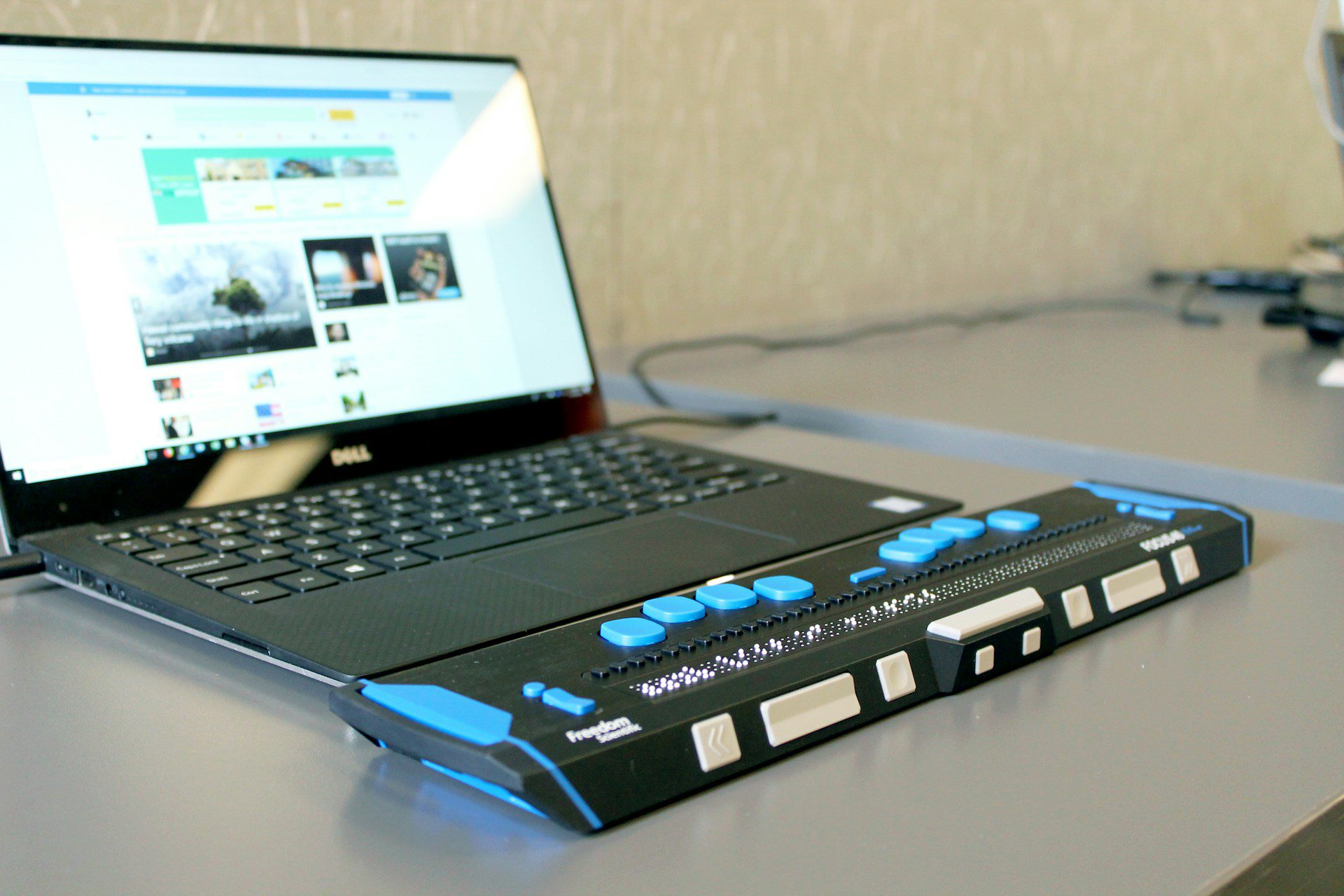
    Caption: A hand wearing a virtual keyboard device that connects to the computer via Bluetooth and allows the user to type in a variety of locations.

    Leveraging Assistive Technologies

    Understanding and testing with assistive technologies is essential.

    Examples:

    • Voice Recognition Software
    • Screen Magnifiers
    • Alternative Input Devices (joysticks, switches, sip-and-puff)
    • Captioning & Transcripts
    • High Contrast Modes
    • Compatibility Testing

    Assistive Technology in Action – Meet Jared

    Caption: Video courtesy of the Pacer Center

    Cultivating Accessibility Champions

    Strategies include:

    • Education & Training
    • Leadership Support
    • Internal Advocacy Groups
    • Accessibility Policies
    • Cross-Functional Collaboration
    • Accessibility Audits
    • Community Partnerships

    Recommended Resources

    Closing Thoughts

    Accessibility isn’t merely a checkbox — it is a moral imperative and a commitment to inclusivity and equity. Our work shapes the experiences of real people. By embracing continuous improvement and cultivating accessibility champions, we pave the way for a digital future that is truly accessible to all.

    Thank you for taking the time to read my article. I invite you to share your thoughts or feedback in the comments and check back soon for the next piece.

    Sources

    1. National Library of Medicine – World Blindness and Visual Impairment

    2. National Library of Medicine – Adult ADHD Prevalence

    3. Federal Reserve – Economic Well-Being of U.S. Households 2022


  • Elevating Excellence: A Framework for Effective Product Design Reviews

    Elevating Excellence: A Framework for Effective Product Design Reviews

    Introduction

    At the heart of innovation lies the examination and refinement of design concepts, ensuring they align with user needs, business objectives, brand guidelines, and technical feasibility. A framework for product design reviews is indispensable to navigate this process with precision and purpose. In this article, we dive into the intricacies of such a framework, exploring strategies to elevate excellence in product design reviews.

    From establishing clear objectives to fostering a culture of constructive feedback, we unveil essential components for conducting impactful design reviews that drive exceptional outcomes. Join me as we embark on a journey to optimize the product design review process and unleash the full potential of your team’s creativity and collaboration.

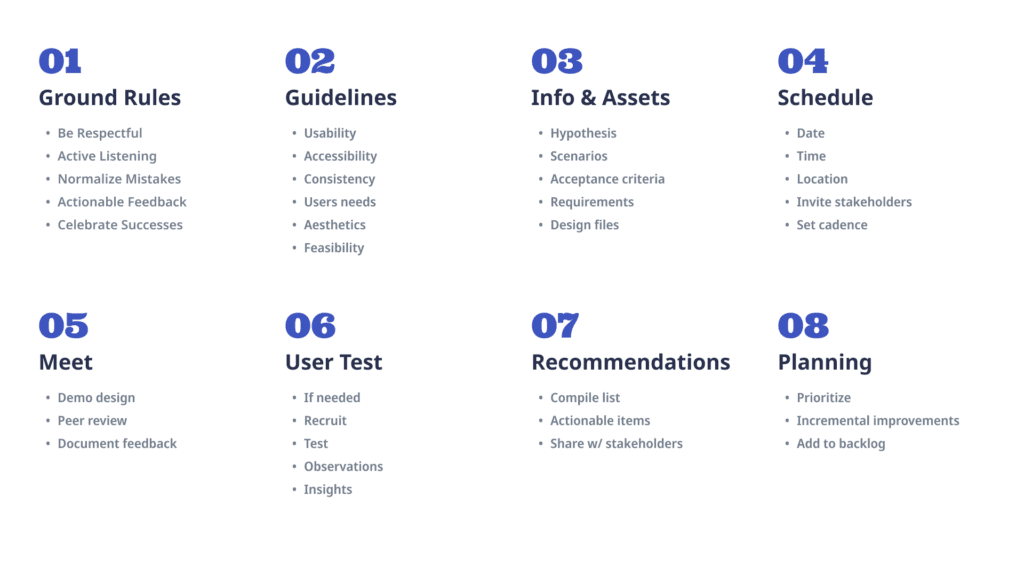
    Ground Rules

    Effective design reviews play a pivotal role in fostering collaboration and sparking innovation within a team. To maximize the productivity and creativity of these sessions, it’s important to set clear ground rules that prioritize respect, active listening, and constructive feedback. These ground rules serve as the foundation for an environment where creativity flourishes, collaboration thrives, and continuous improvement is embraced.

    Ground Rules Checklist

    • Be Respectful – Focus on merits and improvement areas rather than personal opinions.
    • Active Listening – Listen without interruption and ask clarifying questions.
    • Normalize Mistakes – View feedback as an opportunity for growth.
    • Actionable Feedback – Provide specific, practical suggestions.
    • Celebrate Successes – Recognize effort and highlight wins.

    By adhering to these ground rules, we cultivate an environment that nurtures creativity, collaboration, and continuous improvement.

    Guidelines

    A comprehensive set of design review guidelines is crucial for ensuring that every aspect of a design is meticulously examined and refined. These guidelines serve as a roadmap for evaluating effectiveness and user-friendliness.

    Usability

    • Clarity
    • Efficiency
    • Learnability
    • Error Handling

    Accessibility

    • WCAG Compliance
    • Keyboard Navigation
    • Color Contrast

    Consistency

    • Visual Consistency
    • Interaction Consistency
    • Platform Guidelines

    Alignment with User Needs

    • Research Insights
    • Persona Alignment
    • Task Alignment

    Visual Design

    • Aesthetic Appeal
    • Brand Consistency
    • Typography & Readability

    Technical Feasibility

    • Feasibility Analysis
    • Scalability
    • Compatibility

    Feedback & Iteration

    • Solicitation of Feedback
    • Iterative Refinement
    • Flexibility for Change

    Frequency / Cadence

    Design reviews should occur regularly throughout the project lifecycle. Weekly or bi-weekly is appropriate for most teams. Larger projects may require milestone reviews after wireframes, prototypes, or major iterations. The cadence should match the value being gained from feedback.

    Key Reminder: For most projects, weekly or bi-weekly reviews are appropriate.

    Essential Info & Assets

    Before a design review begins, gather the necessary information and assets to enable productive discussion.

    Essential Info Checklist

    • Requirements – Acceptance criteria and stakeholder goals
    • Technical Constraints – Platform or performance limitations
    • User Research Findings – Interviews, surveys, usability insights
    • Designs – Visual comps, flows, specs, Figma links
    • Previous Feedback – Iterations and updates made

    Having this information enables informed decision-making and constructive collaboration.

    Putting Guidelines into Practice: A Case Study

    In this section, we walk through a real-life design review example. The designer provides all necessary information and assets. The team evaluates the design, identifies improvements, conducts user testing, and compiles actionable items to guide iteration. This demonstrates practical application of the framework.

    Essential Info (Example)

    • Hypothesis: Adding a class finder below the header increases registrations.
    • User Type: New users in awareness-to-action funnel.
    • Requirements: Jira story link.
    • Designs: Figma link.
    • Technical Constraints: WordPress block builder with Tailwind.
    • Previous Feedback: Intent confusion caused by new component placement.
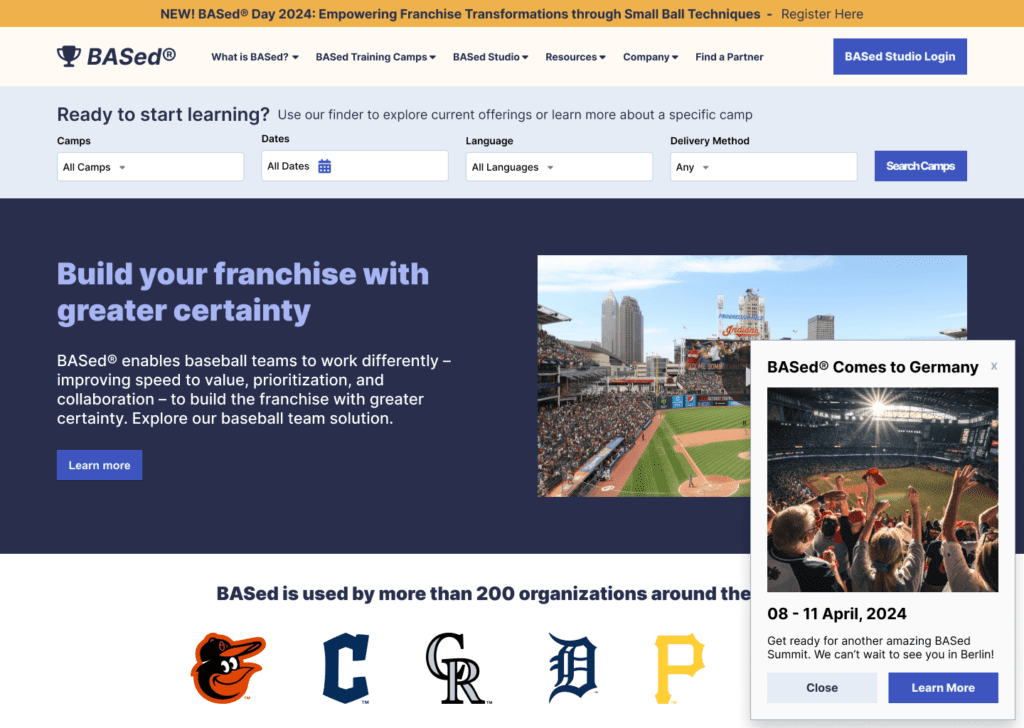
    example design for review

    Feedback

    Feedback falls into two categories: Qualitative and Quantitative.

    Qualitative

    Subjective impressions validated through testing and observation.

    Examples

    • It looks busy
    • Initial intent is unclear
    • Lacks contrast
    • Too many styles

    Quantitative

    Objective measurements and rule-based assessments.

    Examples

    • Too many primary buttons
    • Line length exceeds 80 characters
    • Broken heading hierarchy
    • Accessibility non-compliance
    • Too many font styles
    • Inconsistent capitalization
    • Mobile layout breaks
    • Remove custom letter spacing

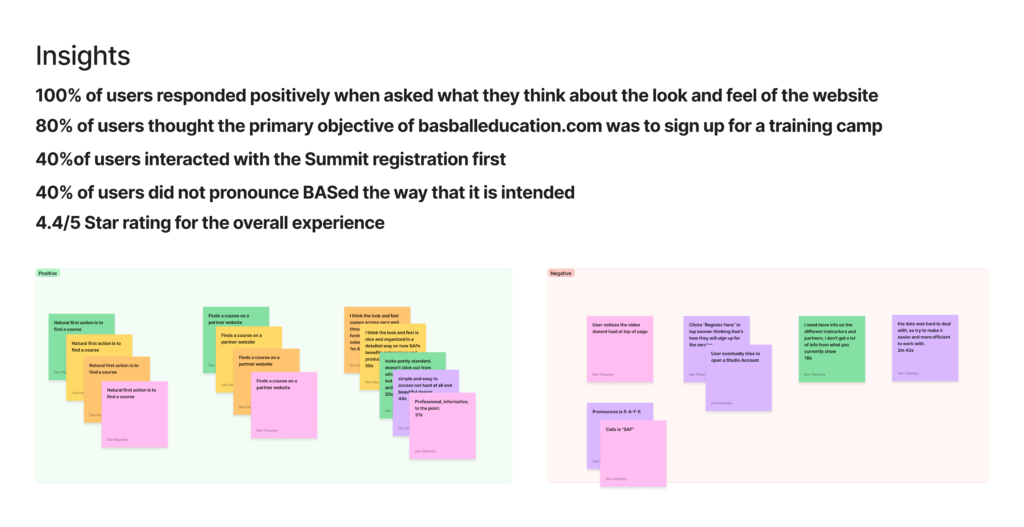
    User Testing

    This section demonstrates qualitative feedback validation through observation and testing.

    user testing feedback example

    Recommendations

    After testing and peer review, actionable changes are assembled.

    Actionable changes

    • Update heading hierarchy
    • Use secondary and tertiary buttons
    • Utilize text links
    • Normalize font styles
    • Remove border radius on inputs
    • Update responsive breakpoints
    • Reduce line length
    • Shorten long sentences
    • Improve screen reader support
    • Consider A/B testing placement

    Sharing recommendations with stakeholders and developing an implementation plan ensures alignment and execution.

    Closing Thoughts

    Design reviews are a critical component in the iterative process of creating exceptional user experiences. Through structured guidelines, collaboration, and validated feedback, teams can refine designs, ensure alignment with user needs, and drive continuous innovation. The principles outlined here empower teams to deliver products that resonate with users, support business success, and create lasting impact.

    Thank you for taking the time to read this article. I invite you to share your thoughts or feedback in the comments and check back soon for the next piece.

  • Designing with Empathy: Evaluating and Scaling Empathetic Design

    Designing with Empathy: Evaluating and Scaling Empathetic Design

    In this lesson, we embark on a journey to assess and expand upon the empathetic design principles we’ve cultivated thus far. We’ll explore methods for measuring the effectiveness of empathetic design through metrics and assessment tools. Additionally, we’ll uncover strategies for scaling empathy across teams and organizations, fostering a culture of user-centricity that extends beyond individual projects. Finally, we’ll draw inspiration from real-world case studies and best practices, providing valuable insights into successful implementations of empathetic design. Get ready to evaluate and scale your empathetic design practices, enriching your approach and impact in the realm of design.

    Measuring Empathy in Design: Metrics and Assessment Tools

    Measuring empathy in design involves utilizing specific metrics and assessment tools to gauge the effectiveness of empathetic strategies. Metrics might include user satisfaction ratings, emotional engagement metrics, or feedback on user experiences. Assessment tools like surveys, empathy mapping techniques, and usability testing help quantify and qualify the impact of empathetic design on user interactions.

    Example User Satisfaction Survey

    Thank you for participating in this survey to help us evaluate the effectiveness of our product. Your feedback is invaluable in shaping our approach to creating user-centric experiences.

    1. On a scale of 1 to 5, how satisfied are you with your recent experience using our product/service?
      • 1: Very Dissatisfied
      • 2: Dissatisfied
      • 3: Neutral
      • 4: Satisfied
      • 5: Very Satisfied
    2. How well did our product/service address your emotional needs and preferences?
      • Not at all
      • Somewhat
      • Moderately
      • Very well
      • Exceptionally well
    3. To what extent do you feel that our design reflects an understanding of your needs and concerns?
      • Not at all
      • Somewhat
      • Moderately
      • Very much
      • Completely
    4. Did you feel that our product/service demonstrated empathy towards your situation or challenges?
      • Not at all
      • Somewhat
      • Moderately
      • Very much
      • Absolutely
    5. How easy was it for you to navigate and interact with our product/service?
      • Very Difficult
      • Difficult
      • Neutral
      • Easy
      • Very Easy
    6. Based on your experience, how likely are you to recommend our product/service to others?
      • Not at all likely
      • Slightly likely
      • Moderately likely
      • Very likely
      • Extremely likely
    7. Do you have any suggestions or feedback on how we can further enhance our empathetic design approach?

    Thank you for taking the time to complete this survey. Your input is invaluable in helping us improve our products/services to better meet your needs and expectations.

    Strategies for Scaling Empathy Across Teams and Organizations

    Scaling empathy across teams and organizations requires a cultural shift towards prioritizing user-centricity. Strategies include fostering a shared understanding of the importance of empathy, integrating empathy into company values and processes, and conducting empathy-focused training sessions. Encouraging cross-department collaboration and regularly sharing user stories and insights further embeds empathy in the organizational DNA.

    Here are some strategies to achieve this:

    1. Leadership Support and Modeling: Leadership should demonstrate and advocate for empathetic behavior in all interactions, both internally and externally. When leaders prioritize empathy, it sets a precedent for the rest of the organization to follow.
    2. Training and Workshops: Offer training sessions and workshops on empathy and its importance in various aspects of the organization, including customer service, product development, and team collaboration. These sessions can include case studies, role-playing exercises, and discussions to reinforce understanding and application.
    3. Incorporate Empathy into Values and Mission: Integrate empathy into the organization’s core values and mission statement. By explicitly stating the importance of empathy, it becomes a guiding principle that informs decision-making and actions at all levels.

    By implementing these strategies, organizations can create a culture where empathy is valued, understood, and practiced by all employees. This not only leads to better relationships with customers and stakeholders but also fosters a more inclusive and supportive work environment.

    Real-World Case Studies and Best Practices in Empathetic Design Implementation

    Exploring real-world case studies and best practices offers tangible examples of successful empathetic design implementations. These case studies highlight how organizations applied empathy to solve user problems effectively. Analyzing these cases provides valuable insights into the practical application of empathetic design principles, offering inspiration and guidance for implementation.

    A compelling real-world case study in empathetic design is Airbnb’s “Open Homes” initiative. This initiative allows hosts to offer free housing to displaced individuals during crises such as natural disasters or conflicts. By empathizing with the needs of displaced individuals, adopting a user-centric approach, collaborating with communities, measuring impact, and ensuring scalability and sustainability, Airbnb has created a solution that makes a meaningful difference in people’s lives during times of crisis.

    Another excellent example of empathetic design is the redesign of the Mayo Clinic’s patient experience. It exemplifies empathetic design principles by understanding patient needs, co-creating with patients, creating a welcoming environment, streamlining processes, empowering patients, and prioritizing continuous improvement. This patient-centered approach has resulted in a more compassionate, supportive, and effective healthcare experience for patients and their families.

    Key Takeaways

    • Empathy Measurement Tools: Utilize metrics and assessment tools to measure the impact of empathetic design on user experiences.
    • Cultural Integration Strategies: Implement strategies to scale empathy, fostering a user-centric culture across teams and organizations.
    • Learning from Case Studies: Real-world case studies provide valuable insights and best practices for effective empathetic design implementation.

    By employing measurement tools to assess empathy’s impact, implementing strategies for scaling empathy across teams, and drawing inspiration from successful case studies, organizations can systematically integrate and amplify empathetic design practices. This fosters a culture where empathetic design is not just a concept but a fundamental guiding principle driving impactful user experiences.


    Thank you for taking the time to read my article! I value your interest and engagement. I invite you to continue the conversation by sharing your thoughts, questions, or feedback in the comments section below.

    Don’t forget to like and share this article with your network if you found it valuable. And remember to check back in a couple weeks for my next insightful article. Until then, stay creative and keep exploring!

  • Designing with Empathy: Empathy in Product Development

    Designing with Empathy: Empathy in Product Development


    From ideation to prototyping, this lesson explores how embedding empathy in the creative process enriches designs with emotional resonance. Additionally, we’ll uncover the art of testing for user empathy and emotional responses, refining products for enhanced user experiences. Lastly, we’ll address the delicate balance required to harmonize empathy with functional and business objectives, ensuring that empathetic design aligns seamlessly with broader goals.

    Implementing Empathy in Ideation and Prototyping

    Infusing empathy into ideation involves considering users’ emotional needs and experiences right from the initial concept phase. Design thinking sessions that focus on understanding user stories, pain points, and desires pave the way for ideation steeped in empathy. Prototyping with empathy means creating tangible representations that reflect users’ emotions and interactions, allowing for iterative improvements based on empathetic feedback.

    Testing for User Empathy and Emotional Response

    User testing goes beyond functionality to assess how users emotionally engage with a product or service. Techniques like user interviews, observation, and task-based assessments uncover emotional responses. Understanding users’ emotional reactions helps refine design elements to evoke desired emotional responses and enhance overall user experiences.

    Balancing Empathy with Functional and Business Objectives

    While empathy is pivotal, it must align with functional requirements and business goals. Designers navigate a delicate balance between creating emotionally resonant experiences and meeting functional needs and business objectives. This entails considering trade-offs where necessary to ensure that empathetic design doesn’t compromise usability or financial viability.

    Key Takeaways

    • Empathy-driven Ideation: Incorporating empathy from the ideation stage fosters designs that resonate emotionally with users.
    • Testing Emotional Responses: User testing focused on emotional engagement helps refine designs for enhanced user experiences.
    • Harmonizing Empathy with Goals: Balancing empathy with functional and business objectives ensures designs are both emotionally engaging and aligned with broader goals.

    By integrating empathy into ideation and prototyping, testing for emotional responses, and striking a balance between empathy and practical objectives, designers create products that are not only functional but also emotionally resonant. This approach ensures that user experiences are deeply empathetic while meeting business and functional requirements.


    Thank you for taking the time to read my article! I value your interest and engagement. I invite you to continue the conversation by sharing your thoughts, questions, or feedback in the comments section below.

    Don’t forget to like and share this article with your network if you found it valuable. And remember to check back in a couple weeks for my next insightful article. Until then, stay creative and keep exploring!

  • Designing with Empathy: Infusing Empathy into Design Processes

    Designing with Empathy: Infusing Empathy into Design Processes

    In this lesson, we’ll explore how empathy becomes the cornerstone of UI/UX design, fostering intuitive interfaces that resonate with users on a deeper emotional level. Additionally, we’ll uncover the collaborative dynamics with stakeholders through an empathetic lens, ensuring design alignment with diverse perspectives. Finally, we’ll establish the importance of continuous feedback loops, facilitating ongoing empathy integration for designs that evolve with users’ changing needs.

    Integrating Empathy in UI/UX Design

    Empathy in UI/UX design involves understanding users’ emotions, behaviors, and needs to create interfaces that cater to their experiences. This segment explores designing with empathy, such as using inclusive design principles, intuitive navigation, and visually appealing elements to evoke positive user emotions and enhance usability.

    Inclusive Design Principles

    • Accessibility: Implementing features like alt text for images, keyboard navigation, and sufficient color contrast ensures access for users with disabilities, fostering a sense of inclusivity.
    • Diverse Representation: Including diverse imagery, content, and language that resonate with a wide range of users promotes inclusivity and a sense of belonging.
    • Adaptability: Designing interfaces that adapt to various devices and user preferences accommodates different user needs, enhancing usability for all.

    Intuitive Navigation

    • Clear Hierarchy: Structuring information hierarchically with clear headings, categories, and menus allows users to navigate seamlessly, reducing confusion and frustration.
    • Consistency: Maintaining consistent design elements and patterns across the interface aids users in predicting the system’s behavior, promoting ease of use.
    • User-Centric Flow: Designing workflows that align with users’ mental models and expectations enables intuitive interactions, leading to a positive emotional experience.

    Visually Appealing Elements

    • Engaging Visuals: Using high-quality images, appealing colors, and aesthetically pleasing layouts creates a visually engaging experience that evokes positive emotions.
    • Whitespace and Balance: Utilizing whitespace effectively and ensuring a balanced layout avoids overwhelming users, contributing to a more comfortable and pleasant interaction.
    • Emotionally Resonant Design: Incorporating design elements that evoke specific emotions—such as calming colors for relaxation apps or vibrant tones for energetic experiences—enhances user engagement.

    By implementing these principles, navigation techniques, and visually appealing elements, designers create an environment where users feel included, guided, and emotionally connected to the interface. This approach not only enhances usability but also fosters a positive emotional connection with the product or service.

    Collaborative Approaches with Stakeholders through Empathetic Lens

    Collaborating with stakeholders through an empathetic lens fosters a deeper understanding of diverse perspectives. By empathizing with stakeholders’ goals, concerns, and limitations, designers can align their design strategies with broader organizational objectives, ensuring inclusivity and shared understanding.

    Establishing Feedback Loops for Ongoing Empathy Integration

    Creating feedback loops ensures ongoing integration of empathy into design processes. These loops involve collecting user feedback, analyzing usability testing results, and actively seeking input from diverse user groups. Incorporating this feedback iteratively enhances empathy-driven design by addressing evolving user needs.

    Key Takeaways

    • UI/UX Design with Empathy: Integrating empathy in UI/UX enhances user experiences through intuitive and emotionally resonant designs.
    • Empathetic Collaboration: Engaging stakeholders empathetically fosters alignment between design goals and broader organizational objectives.
    • Continuous Feedback Integration: Establishing feedback loops enables iterative improvements, ensuring designs remain empathetic and responsive to evolving user needs.

    By embedding empathy into UI/UX design, fostering empathetic collaboration with stakeholders, and establishing continuous feedback loops, designers create experiences that resonate deeply with users while aligning with organizational goals. This empathetic approach ensures that design solutions are not only user-centric but also reflective of diverse perspectives and constantly evolving user needs.


    Thank you for taking the time to read my article! I value your interest and engagement. I invite you to continue the conversation by sharing your thoughts, questions, or feedback in the comments section below.

    Don’t forget to like and share this article with your network if you found it valuable. And remember to check back in a couple weeks for my next insightful article. Until then, stay creative and keep exploring!

  • Designing with Empathy: Journey Mapping Strategies

    Designing with Empathy: Journey Mapping Strategies

    This lesson delves into the powerful world of customer journey mapping—an essential tool for understanding user experiences comprehensively. We’ll explore the meticulous process of creating detailed journey maps that trace users’ interactions from start to finish. From pinpointing touchpoints and pain points to mapping emotional states throughout the user journey, this lesson equips designers with the tools to empathetically visualize and analyze the user’s holistic experience.

    Creating Comprehensive Customer Journey Maps

    Customer journey maps visualize the end-to-end experience users have with a product or service. Start by outlining the various stages users go through, from initial awareness to post-purchase interactions. For instance, in an e-commerce platform, stages might include ‘Browsing,’ ‘Adding to Cart,’ ‘Checkout,’ ‘Product Delivery,’ and ‘Customer Support.’ Each stage should detail user actions, emotions, and pain points encountered.

    Caption: A journey map (above) is a visual representation of the user’s experience with a product or service, illustrating their interactions, emotions, and pain points across various touchpoints. To fill in a journey map, plot the user’s actions, thoughts, and emotions at each stage of their journey, using insights from user research.

    Example

    1. Define the Scope and Purpose: Identify the specific user experience you want to map, whether it’s a product, service, or specific interaction. Determine the objectives of the map—whether it’s to improve a particular stage of the user journey or to gain a holistic understanding.
    2. Identify Personas and Stages: Refer to previously crafted user personas and outline the stages of the journey your users go through. Define the key stages from the user’s perspective, starting from initial awareness to post-interaction phases.
    3. Gather Data and Insights: Collect qualitative and quantitative data from user interviews, surveys, analytics, and feedback to understand user behaviors, emotions, pain points, and touchpoints at each stage.
    4. Plot Touchpoints and Actions: Within each stage, map out the touchpoints—every interaction point users have with your product or service. Identify the actions users take and the touchpoints they encounter, such as website visits, app usage, customer support interactions, etc.
    5. Highlight Emotional States and Pain Points: Document the emotional highs and lows users experience at different touchpoints. Pinpoint pain points—areas where users face difficulties, frustrations, or negative emotions.
    6. Create the Visual Representation: Design the journey map using visual elements like timelines, charts, or diagrams. Display the stages, touchpoints, actions, emotions, and pain points clearly to facilitate understanding.
    7. Validate and Iterate: Share the journey map with stakeholders, team members, or even users to validate its accuracy. Incorporate feedback and refine the map iteratively based on new insights or changes in the user experience.
    8. Utilize and Iterate: Use the journey map as a reference for making design decisions, improving user experiences, and aligning strategies. Regularly revisit and update the map to reflect changes in user behaviors or product/service modifications.

    Creating a customer journey map is an iterative process that involves continual refinement based on evolving user insights and feedback. The aim is to create a visual representation that empathetically captures the user’s experience, allowing for informed design decisions that enhance overall user satisfaction.

    Identifying Touchpoints and Pain Points in User Experience

    Within each stage of the journey map, identify touchpoints—moments where users interact with the product or service. These touchpoints could be website visits, app interactions, customer service calls, etc. Simultaneously, highlight pain points—areas where users encounter difficulties, frustrations, or negative emotions. Pinpointing these pain points helps in addressing areas for improvement.

    Mapping Emotional States Throughout User Interaction

    An essential aspect of journey maps is capturing the emotional journey of users. Document the emotional highs and lows users experience at different touchpoints. For example, during the ‘Checkout’ stage, a user might feel excited about finalizing a purchase but frustrated due to a complex payment process. Mapping these emotions provides insights into user sentiments and helps in tailoring experiences to evoke positive emotions.

    Key Takeaways

    • Comprehensive Journey Mapping: Visualizing the entire user journey helps in understanding the holistic user experience.
    • Touchpoints and Pain Points: Identifying touchpoints and pain points aids in focusing on areas that significantly impact user satisfaction.
    • Emotional Mapping for User Insights: Mapping emotional states helps in understanding and addressing user sentiments, influencing design decisions for better user experiences.

    By meticulously crafting comprehensive customer journey maps, identifying touchpoints and pain points, and mapping emotional states, designers gain a holistic view of the user experience. This understanding forms the foundation for creating solutions that address user needs and emotions at every stage of their interaction.


    Thank you for taking the time to read my article! I value your interest and engagement. I invite you to continue the conversation by sharing your thoughts, questions, or feedback in the comments section below.

    Don’t forget to like and share this article with your network if you found it valuable. And remember to check back in a couple weeks for my next insightful article. Until then, stay creative and keep exploring!

  • Designing with Empathy: Crafting User Personas

    Designing with Empathy: Crafting User Personas

    This lesson immerses us in the art of creating vivid representations of diverse user segments. We’ll explore the meticulous process of defining, refining, and leveraging user personas to capture the essence of various user groups. From empathy mapping to iterative refinement, this lesson unveils the techniques essential for crafting personas that drive empathetic and user-centric design.

    Defining and Constructing Comprehensive User Personas

    Creating user personas involves defining detailed profiles that represent different user segments. For instance, in a fitness app context, personas might include “Fitness Enthusiast Emma,” outlining her goals, frustrations, and habits. “Beginner Brian” might represent a different segment, highlighting his motivations and challenges. Crafting personas involves extensive research synthesis to capture diverse user characteristics, preferences, and pain points.

    Example

    Step 1: Research and Data Collection

    Gather extensive information through user interviews, surveys, observations, and analytics. Aim to understand user demographics, behaviors, motivations, goals, pain points, and preferences.

    Step 2: Identify Patterns and Commonalities

    Analyze collected data to identify recurring themes, common behaviors, and shared pain points among users. Group similar characteristics and behaviors to form distinct user segments.

    Step 3: Persona Definition

    Choose a primary user segment and begin crafting the persona. Give the persona a name, age, background, and job title that aligns with the identified user group. For example:

    • Name: Marcus
    • Age: 29
    • Occupation: Graphic Designer
    • Background: Marcus is a talented graphic designer with a passion for visual storytelling and creative expression. He holds a Bachelor’s degree in Graphic Design and has been working in the industry for five years. Marcus is known for his bold and innovative design style, which he incorporates into his work across various mediums, including branding, digital marketing, and illustration. Outside of work, Marcus is an avid music lover and enjoys exploring new artists and genres.

    Step 4: Persona Detailing

    Add depth to the persona by including details such as:

    • Demographics: Location, education, family status.
    • Motivations: What drives their actions and decisions.
    • Goals: What are they looking for or trying to achieve.
    • Challenges and Pain Points: Obstacles they face in achieving their goals.
    • Behaviors: How they interact with the product/service.

    Step 5: Empathy Mapping

    Create an empathy map to visualize the persona’s thoughts, feelings, pains, and gains related to your product/service. For instance, understand Marcus’ feelings about music apps, his thoughts on variety, his pains in choosing one, and his gains interest in finding features that enhance his music listening experience..

    Step 6: Validate and Iterate

    Share the persona with stakeholders and team members for feedback. Validate the persona’s accuracy through additional user research or user testing. Iterate the persona based on feedback or new insights gathered.

    Step 7: Persona Utilization

    Leverage the persona across the design process. Use it as a reference point when making design decisions, crafting user journeys, or evaluating features to ensure alignment with user needs and behaviors.

    Creating a user persona is an iterative process that involves continuous refinement based on evolving user insights and feedback. Remember, the goal is to create a detailed, representative profile that empathetically captures the needs and motivations of a specific user segment.

    Utilizing Empathy Maps for Persona Development

    Empathy maps serve as powerful tools for visualizing user personas’ emotions, thoughts, and behaviors. For example, mapping Emily’s feelings about workout intensity or Brian’s thoughts about using fitness tracking features helps in understanding their perspectives. These visual representations aid in empathizing with users, providing deeper insights for persona development by incorporating emotional and behavioral dimensions.

    A user empathy map (above) is a chart that helps you understand your user’s perspective. Capture what users say, do, think, and feel about a product or experience using quotes, behaviors, and emotions to uncover their needs and motivations.

    How To

    Filling out an empathy map involves capturing insights and observations about a user’s thoughts, feelings, actions, and needs. Here’s how you can fill out each section of the empathy map:

    1. Says: Record direct quotes or statements made by the user. These could be expressions of their needs, desires, frustrations, or aspirations. Use quotes obtained from interviews or user feedback to provide firsthand insights into the user’s thoughts and preferences.
    2. Thinks: Document the internal thoughts, beliefs, and attitudes of the user. Consider what the user might be thinking about, such as their goals, motivations, concerns, or expectations. Use empathy and intuition to infer what the user might be thinking based on their behavior and verbal expressions.
    3. Does: Capture the observable actions, behaviors, and interactions of the user. Observe how the user interacts with products, services, or environments in different situations. Pay attention to both routine behaviors and specific actions taken in response to certain triggers or stimuli.
    4. Feels: Explore the emotions, feelings, and sentiments experienced by the user. Consider how the user might be feeling in various situations, such as happy, frustrated, anxious, excited, or confused. Use empathy to empathize with the user’s emotional state and understand the underlying reasons for their feelings.
    5. Influences: External factors that may impact the user’s behavior and decision-making process. Consider the people, things, and places that play a role in shaping the user’s actions and preferences. Examples of influences could include friends and family, cultural norms, societal trends, media, advertisements, or environmental factors. 

    To fill out an empathy map effectively, it’s essential to gather insights from user research, observations, interviews, surveys, and user testing. Engage with users directly to gain a deeper understanding of their experiences, motivations, and challenges. Use empathy and active listening to empathize with the user’s perspective and fill out the empathy map with rich, detailed insights that inform design decisions and solutions.

    Refinement Strategies for Iterative Persona Building

    Iterative persona building involves continuous refinement based on ongoing research and feedback. For instance, revisiting personas to incorporate new data might reveal that Emma’s goals have evolved, requiring persona adjustments. Collaborating with stakeholders and validating personas through user testing ensures accuracy. Iterative refinement ensures personas stay relevant and reflective of users’ evolving needs.

    Example Persona Refinement Strategy

    Quarterly Review:

    • Every three months, schedule a review of user personas to ensure they remain accurate and relevant.
    • Allocate 1-2 hours for the review session.

    Step 1: Data Collection (Week 1-2):

    • Gather quantitative data from analytics tools, such as website traffic, user engagement metrics, and customer surveys.
    • Conduct qualitative research, including user interviews, usability testing, and customer feedback sessions.

    Step 2: Analysis and Synthesis (Week 3-4):

    • Analyze the collected data to identify patterns, trends, and insights related to user behaviors, needs, and preferences.
    • Synthesize the findings to update or refine existing user personas based on the new insights.

    Step 3: Persona Workshop (Week 5):

    • Host a persona workshop with key stakeholders, including designers, product managers, marketers, and customer support representatives.
    • Present the updated personas and discuss the rationale behind the changes.
    • Collaboratively review and validate the updated personas to ensure they accurately represent the target audience.

    Step 4: Documentation and Distribution (Week 6):

    • Document the updated personas, including demographic information, behavioral traits, goals, pain points, and motivations.
    • Distribute the updated personas to relevant teams and departments, such as product development, marketing, sales, and customer support.
    • Ensure that everyone has access to the latest personas and understands how to use them effectively in their work.

    Step 5: Implementation and Monitoring (Ongoing):

    • Implement changes and updates to products, services, and marketing strategies based on the insights from the updated personas.
    • Monitor user feedback, engagement metrics, and other relevant data to assess the impact of the changes.
    • Iterate on the personas as needed based on ongoing research and feedback from stakeholders.

    By following this schedule, you can ensure that your user personas remain accurate, actionable, and aligned with the evolving needs of your target audience.

    Key Takeaways

    • Comprehensive Persona Construction: Building detailed personas involves in-depth research and synthesis to capture diverse user segments.
    • Empathy Maps for Deeper Insights: Empathy maps provide visual representations of user emotions and behaviors, enhancing understanding for persona development.
    • Iterative Persona Refinement: Continuous refinement based on ongoing research and feedback ensures personas remain accurate and aligned with users’ evolving needs.

    Through comprehensive persona construction, utilization of empathy maps, and iterative refinement strategies, designers gain a profound understanding of their users. These insights fuel the creation of tailored and impactful solutions that resonate with diverse user segments.


    Thank you for taking the time to read my article! I value your interest and engagement. I invite you to continue the conversation by sharing your thoughts, questions, or feedback in the comments section below.

    Don’t forget to like and share this article with your network if you found it valuable. And remember to check back in a couple weeks for my next insightful article. Until then, stay creative and keep exploring!