
In the fast-paced world of product design, efficiency is paramount. Artificial Intelligence is becoming a game changer in design automation. This article explores how AI is transforming the creative landscape by automating repetitive tasks. From generating design variations to streamlining layout processes, AI enhances efficiency, unlocks creative potential, and reshapes the future of design.
The Challenge of Repetitive Design Tasks
Design across graphic, web, and product disciplines often involves repetitive work that can be time consuming and mentally draining. Tasks such as resizing images, adjusting layouts, and producing multiple variations for A/B testing are necessary but can slow innovation and reduce time available for higher level creativity.
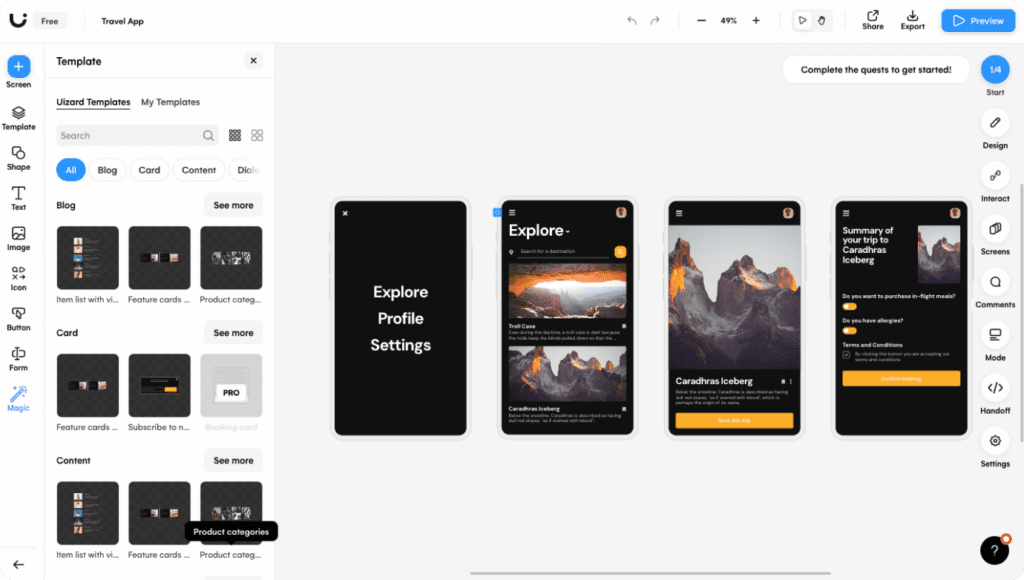
Caption: UIzard is one of the easiest-to-use design and ideation tools powered by AI.
The Promise of AI in Design Automation
AI in design automation offers liberation from repetitive effort. By delegating routine tasks to intelligent systems, designers gain more time for strategic thinking and creative exploration. Key areas of impact include the following.
AI-Generated Design Variations
AI tools can rapidly generate multiple visual directions such as color schemes, typography pairings, and layout options. This expands creative possibilities while saving significant time.
Layout Design Streamlining
AI algorithms can automatically arrange elements, manage spacing, and optimize hierarchy using established design principles. This accelerates layout creation while preserving quality.
Image Editing and Enhancement
AI driven tools can retouch photos, remove backgrounds, and enhance clarity automatically, reducing hours of manual editing.
Content Generation
In marketing and product design, AI copy tools can produce ad text, product descriptions, and articles. This speeds production and maintains consistency.
Rapid Prototyping
AI powered platforms can convert wireframes into interactive prototypes, minimizing the need for manual coding and enabling faster validation.
The Synergy of AI and Human Creativity
AI does not replace creativity. It amplifies it. Designers and AI work best as partners, where AI manages the repetitive workload and humans focus on vision, storytelling, and refinement. This collaboration boosts efficiency without sacrificing originality or quality.
Challenges and Considerations
As adoption grows, several issues require attention.
- Data Quality: AI systems depend on large datasets. Ensuring diversity and fairness is critical to avoid reinforcing bias.
- Ethical Implications: Concerns such as copyright, authorship, and plagiarism must be addressed when generating automated content.
- User-Centric Design: Automation should support human insight, not override it. Designers must maintain balance between efficiency and empathy.
The Future of Design Automation
AI will continue to expand its influence across creative industries.
- Real-Time Collaboration: Designers will increasingly work alongside intelligent assistants that provide instant feedback and suggestions.
- Hyper-Personalization: Interfaces and content will be tailored dynamically to individual preferences.
- Cross-Disciplinary Integration: AI will connect design with marketing, analytics, and engineering, producing more holistic solutions.
Conclusion
AI driven design automation marks a new era of efficiency and creativity. By offloading repetitive work to intelligent tools, designers can focus on innovation, deliver higher quality outcomes faster, and adapt to an evolving digital landscape. As collaboration between AI and human creativity deepens, the future of design promises greater speed, personalization, and imaginative potential.
If you enjoyed reading this article, consider sharing it with a colleague or friend, and stay tuned for the next piece on ethical considerations in AI driven design.
Leave a Reply