
This article explores Natural Language Processing and its pivotal role in UX design. It looks at applications in chatbots, voice assistants, and content analysis, and how these technologies shape conversational interfaces. The goal is to uncover practical insights for designing effective, user-centric conversational experiences that blend technology with human interaction.
The Power of Natural Language Processing
Natural Language Processing is a branch of artificial intelligence focused on the interaction between humans and computers through everyday language. It enables machines to understand, interpret, and respond in ways that feel intuitive and human. In UX design, NLP introduces a new dimension by making technology more accessible and user friendly.
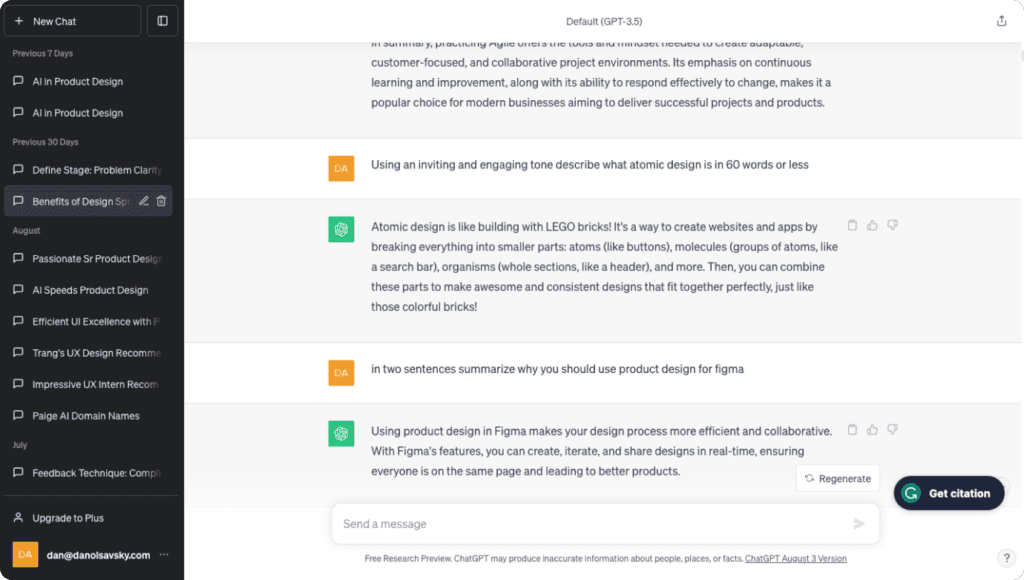
Caption: ChatGPT is a conversational AI that can chat with you, answer follow-up questions, and even challenge incorrect assumptions.
Chatbots: Conversations Redefined
Chatbots are now common across digital interfaces, giving users instant access to information and services. NLP is the core technology that allows these virtual assistants to understand queries, provide relevant responses, and hold meaningful conversations.
The Role of NLP in Chatbots
Intent Recognition: NLP algorithms analyze wording and context to determine what users are trying to accomplish.
Context Preservation: Chatbots can maintain context across multiple turns, understanding follow-up questions and references to earlier messages.
Personalization: NLP-driven chatbots can tailor responses using user data, creating more engaging and user-centered interactions.
Voice Assistants: AI Companions
Voice assistants such as Siri, Alexa, and Google Assistant have changed how people interact with technology. NLP enables communication with devices using natural speech rather than commands or menus.
How NLP Enhances Voice Assistants
Speech Recognition: Spoken language is converted into text so systems can interpret commands.
Language Understanding: Assistants can interpret slang, accents, and conversational phrasing.
Conversational Abilities: NLP supports multi-turn conversations that feel more natural and interactive.
Content Analysis: Unveiling User Insights
Content analysis is essential in UX because it reveals user sentiment and feedback patterns. NLP tools are highly effective at analyzing large volumes of text to inform design decisions.
NLP in Content Analysis
Sentiment Analysis: Determines whether user feedback is positive, negative, or neutral.
Keyword Extraction: Identifies recurring topics and themes across large datasets.
Language Translation: Breaks down language barriers, enabling analysis of global feedback.
Designing Effective Conversational Interfaces
Creating strong conversational interfaces requires balancing technological capability with human expectation. Key considerations include:
- Clarity and Consistency: Responses should be predictable and easy to understand.
- User Guidance: Provide prompts or suggestions that help users know what they can ask.
- Feedback and Error Handling: Offer informative responses when misunderstandings occur.
- User Data Privacy: Clearly communicate how data is used and give users control where possible.
The Future of Conversational UX
As NLP continues to evolve, conversational UX will expand in several directions:
- Emotion Recognition: Interfaces may detect emotional tone and respond with empathy.
- Multimodal Conversations: Blending text, voice, and gestures into a single experience.
- Personalized Conversations: Systems will better understand individual preferences and tailor interactions accordingly.
Conclusion
Natural Language Processing is reshaping UX design by enabling interactions that feel human and intuitive. From chatbots and voice assistants to large-scale content analysis, NLP improves accessibility and user focus. The future points toward increasingly engaging and personalized conversational experiences, where technology and human communication continue to merge.
If you enjoyed reading this article, consider sharing it with a colleague or friend, and stay tuned for the next piece on AI for design automation.
Leave a Reply