

In the digital age, inclusivity and accessibility are not buzzwords. They are core principles that shape how people interact with technology. This article explores the evolving landscape of accessibility and inclusivity in design, highlighting how Artificial Intelligence is transforming the creation of products that serve a broader audience. From AI-driven screen readers to voice interfaces and captioning tools, AI is helping remove barriers and make the digital world more inclusive for everyone.
The Imperative of Accessibility and Inclusivity
Accessibility and inclusivity in design mean ensuring digital products and services can be used by as many people as possible, regardless of ability or disability. The goal is to create a level playing field where technology enables rather than restricts. With an aging population and a more diverse global audience, the importance of inclusive design continues to grow.
The AI-Powered Revolution
Artificial Intelligence has emerged as a powerful catalyst in advancing accessibility and inclusivity. AI systems can understand, adapt, and respond to individual needs, making it possible to deliver highly personalized and accessible digital experiences.
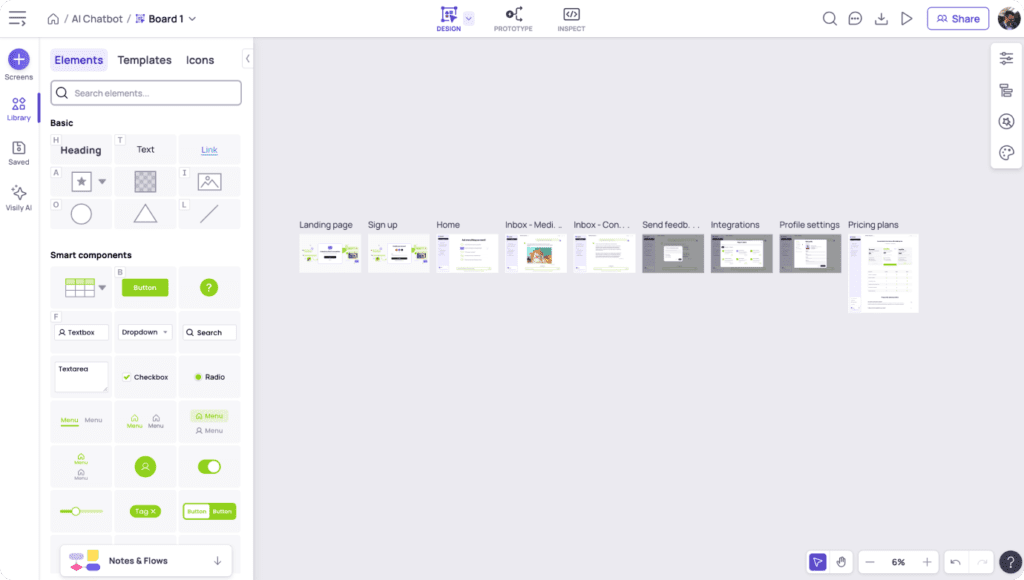
Caption: The AI-powered app Visily can generate design prototypes in seconds.
AI-Driven Screen Readers
Screen readers are essential tools for people with visual impairments. AI-powered screen readers extend these capabilities by using image recognition and natural language processing to provide richer descriptions of on-screen content. They can read text, describe images, interpret charts, and explain page layouts, improving access to digital information.
Voice Interfaces: Conversational Accessibility
Voice interfaces have become widespread through assistants such as Siri and Alexa. For users with mobility challenges or those who prefer speech interaction, AI-driven voice systems provide meaningful access. Natural language processing allows these tools to understand spoken commands, enabling control of devices, information searches, and navigation through digital environments.
Captioning Tools: Bridging Communication Gaps
Captioning tools support people who are deaf or hard of hearing by making multimedia content understandable. AI-powered captioning provides real-time, high-accuracy subtitles for live events, video calls, and recorded media. These systems adapt to accents, languages, and background noise to maintain clear communication.
Beyond Traditional Accessibility
AI’s impact extends into additional areas:
- Emotion Recognition: AI can analyze facial expressions and vocal tone to detect emotional cues, which can assist users who struggle with social or emotional interpretation.
- Autonomous Vehicles: Self-driving technology has the potential to increase independence for individuals with mobility limitations.
- Language Translation: AI translation tools break down language barriers and support communication across cultures.
Challenges and Ethical Considerations
Progress in AI accessibility also introduces responsibilities:
- Data Privacy: User data collection must be handled transparently and with clear consent.
- Bias and Fairness: AI systems must be monitored to avoid reinforcing discrimination or exclusion.
- Universal Design: Balancing personalized accessibility with broad usability for all users requires careful design decisions.
The Future of Accessibility and Inclusivity
As AI evolves, several possibilities emerge:
- AI-Personalized Accessibility: Interfaces will dynamically adjust to individual needs in real time.
- Seamless Multimodal Interfaces: Users will fluidly switch between voice, touch, and gesture interactions.
- Global Inclusivity: Language translation, universal design practices, and accessible content will help make digital spaces truly worldwide and inclusive.
Conclusion
Artificial Intelligence is reshaping accessibility and inclusivity by providing innovative tools that empower people with disabilities while improving experiences for everyone. From screen readers and voice interfaces to captioning and translation, AI is reducing barriers and expanding opportunity. The partnership between AI and thoughtful design will continue to determine whether technology becomes a bridge toward inclusion or an obstacle to overcome.
If you enjoyed this article, consider sharing it with a colleague or friend, and stay tuned for the next piece on Natural Language Processing in UX.
Leave a Reply