

User research, the backbone of informed design, is undergoing a remarkable transformation with the rise of Artificial Intelligence (AI). In this article, we explore the evolution of user research as AI takes the driver’s seat. We look at how AI is revolutionizing data collection, sentiment analysis, behavior tracking, and persona creation, reshaping the way designers understand and empathize with their users.
The Essence of User Research
User research is the foundation of user-centered design. It involves understanding behaviors, needs, and preferences to inform design decisions. Traditionally, research has relied on surveys, interviews, and observation. While valuable, these methods can be time consuming and subject to bias.
AI’s Disruptive Role in User Research
AI introduces new efficiency and depth. By automating parts of the research process and leveraging big data, AI can unlock insights that were previously difficult or impossible to access.
Data Collection Reinvented
AI accelerates data collection by analyzing large volumes of online and offline user-generated content. This includes social posts, product reviews, customer support conversations, and more. Key advantages include scale, real-time insights, and cross-channel analysis.
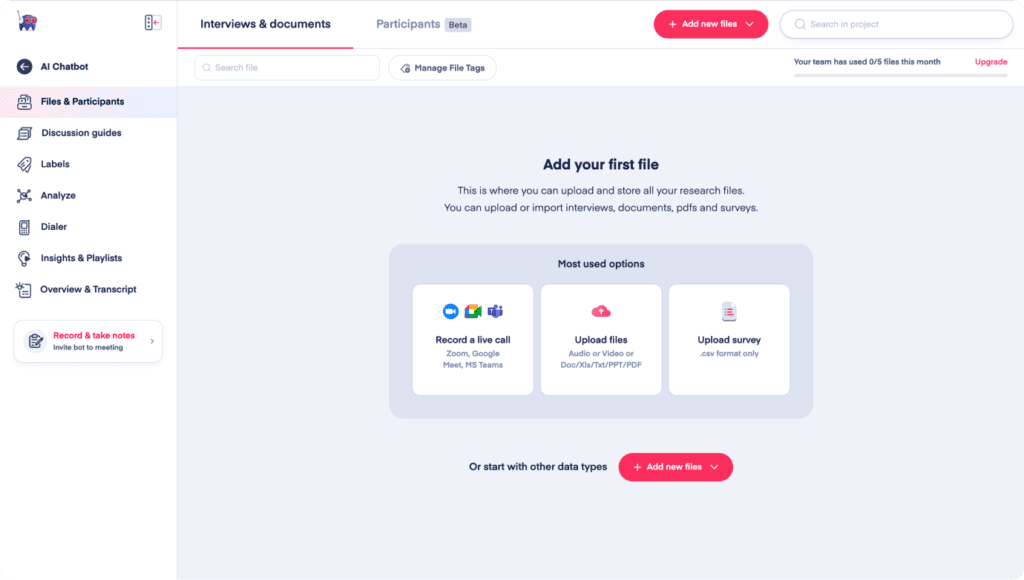
Caption: The AI-powered app Marvin can record and analyze research data in seconds.
Sentiment Analysis at Scale
Sentiment analysis determines user emotions and attitudes from text data. AI-powered sentiment analysis can process massive datasets to uncover patterns and trends. Key contributions include emotion recognition, contextual understanding, and customization.
Behavior Tracking with Precision
Understanding user behavior is essential for effective design. AI-driven behavior tracking reveals how users interact with products and services. AI contributes through journey mapping, predictive analytics, and insights derived from A/B testing.
Persona Creation and Personalization
Personas are fictional representations of target users. AI streamlines persona creation by analyzing user data and generating personas based on real behavior. AI-enhanced personas are data-driven, dynamic, and support hyper-personalized experiences.
Challenges and Ethical Considerations
AI-powered user research also introduces important responsibilities:
Data Privacy: Data collection and analysis must respect privacy regulations and user consent.
Bias Mitigation: Algorithms must be trained and monitored to avoid reinforcing bias in findings.
Transparency: Users should understand how their data is used, and transparency helps maintain trust.
The Future of AI-Powered User Research
User research will continue to evolve as AI advances:
Multimodal Analysis: AI will combine text, images, voice, and other sources for richer insights.
Emotion and Sentiment Enhancement: Better interpretation of complex emotions will enable deeper empathy.
Real-Time Predictive Insights: Real-time analysis and prediction will help teams make informed decisions faster.
Conclusion
AI is making user research more efficient, scalable, and insightful. By automating data collection, strengthening sentiment analysis, tracking behavior, and improving persona creation, AI helps designers build more user-centered and personalized experiences. As AI progresses, the synergy between design and AI-driven research will shape the future of user-centered design, ensuring products and services that resonate more deeply with user needs.
If you enjoyed reading this article, please share it with a colleague or friend, and join me next week to learn about AI-driven ideation and concept generation.
Leave a Reply